

Thirty years ago, 50-year-old Sobit Sharma of Khabara, Beni Municipality–2, could not even afford vegetable seeds worth one hundred rupees. Today, his bond with the soil has earned him recognition, wealth, and a respected identity.
“I borrowed money to buy vegetable seeds worth 150 rupees and planted cabbage and cauliflower instead of paddy in Asar 2052 (1995). Neighbors said I had lost my mind,” Sharma recalls. “Later, when cauliflower and cabbage would not even sell for two rupees per kilo in Bhadau, I buried them in the field. But the mustard greens planted alongside covered the investment made on the cabbage and cauliflower.”
After realizing that cereal farming alone could not sustain his family, Sharma began commercial vegetable farming on just three ropanis of land. Over time, it greatly improved his family’s economic condition and earned him both fame and financial success. In Myagdi district, where only a handful of farmers have succeeded professionally in agriculture, Sharma’s name is among the foremost.
Besides becoming a successful entrepreneur himself, Sharma has also become a source of inspiration for many others. Through his own hard work and dedication, he now earns around NRs 150,000 per month and saves nearly NRs 50,000. He has educated his daughter as a Health Assistant and sent her abroad, while his son is pursuing a master’s degree in Pokhara. Income from vegetable and banana farming has enabled him to build a concrete house in Khabara and purchase land in Lekhnath, Pokhara.
Using two lakh rupees earned from selling vegetables, Sharma bought seven ropanis of landslide-affected barren land at Darimpata in Khabara. He later spent an additional NRs 1.6 million clearing the landslide debris and leveling the land.
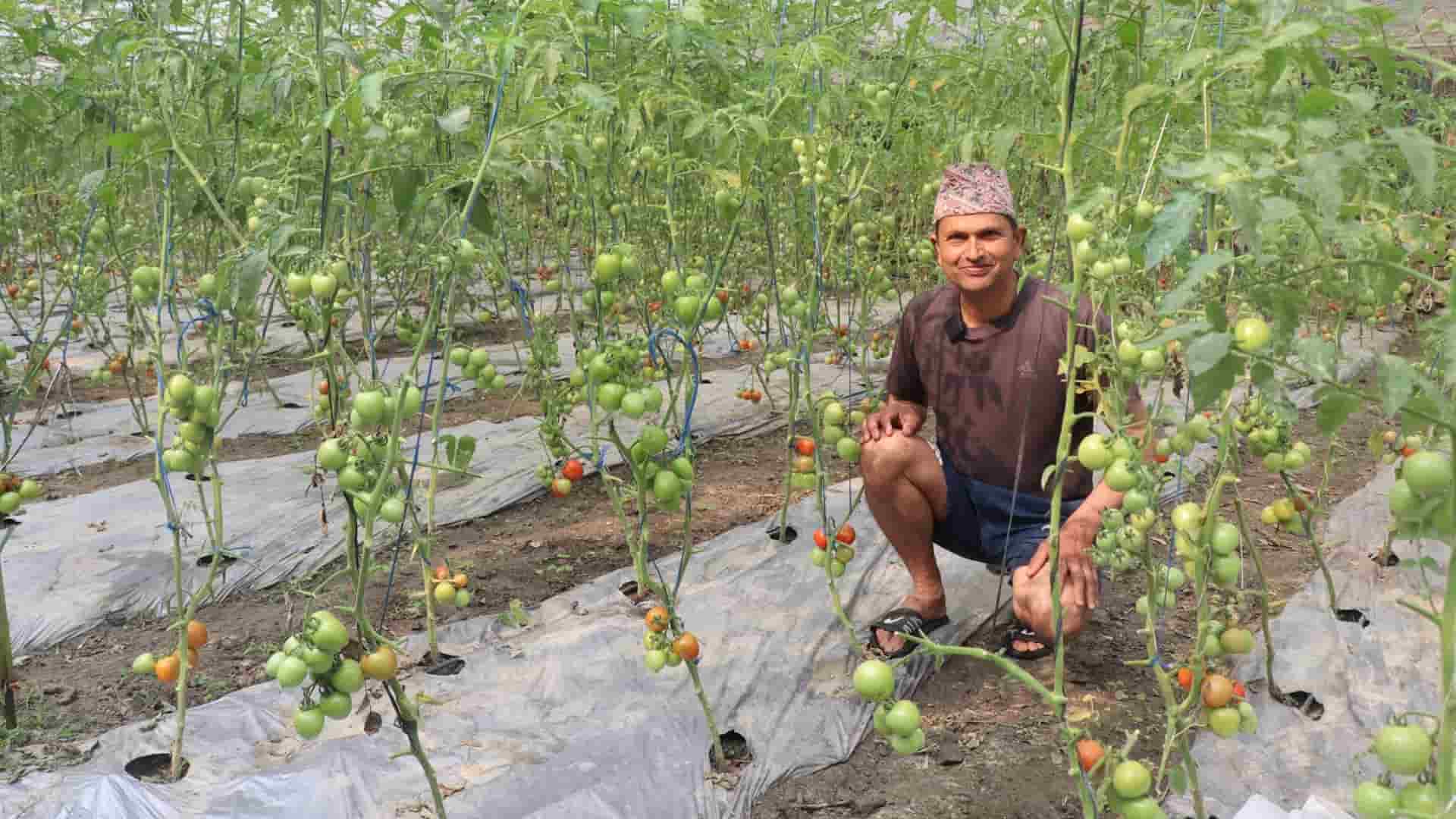
“In the middle of the field, I have built four tunnels, while vegetables are grown in the open areas and bananas are planted along the edges,” Sharma said. “I use vermicompost produced from earthworms and cow urine as an alternative to chemical pesticides, practicing organic farming methods.”
That barren hillside has now transformed into a lush green agricultural farm. Sharma has also kept ten beehives for pollination. On his ancestral 38 ropanis of land in Rohote and Khabara, he cultivates Malbhog bananas, lemons, and fodder grass.
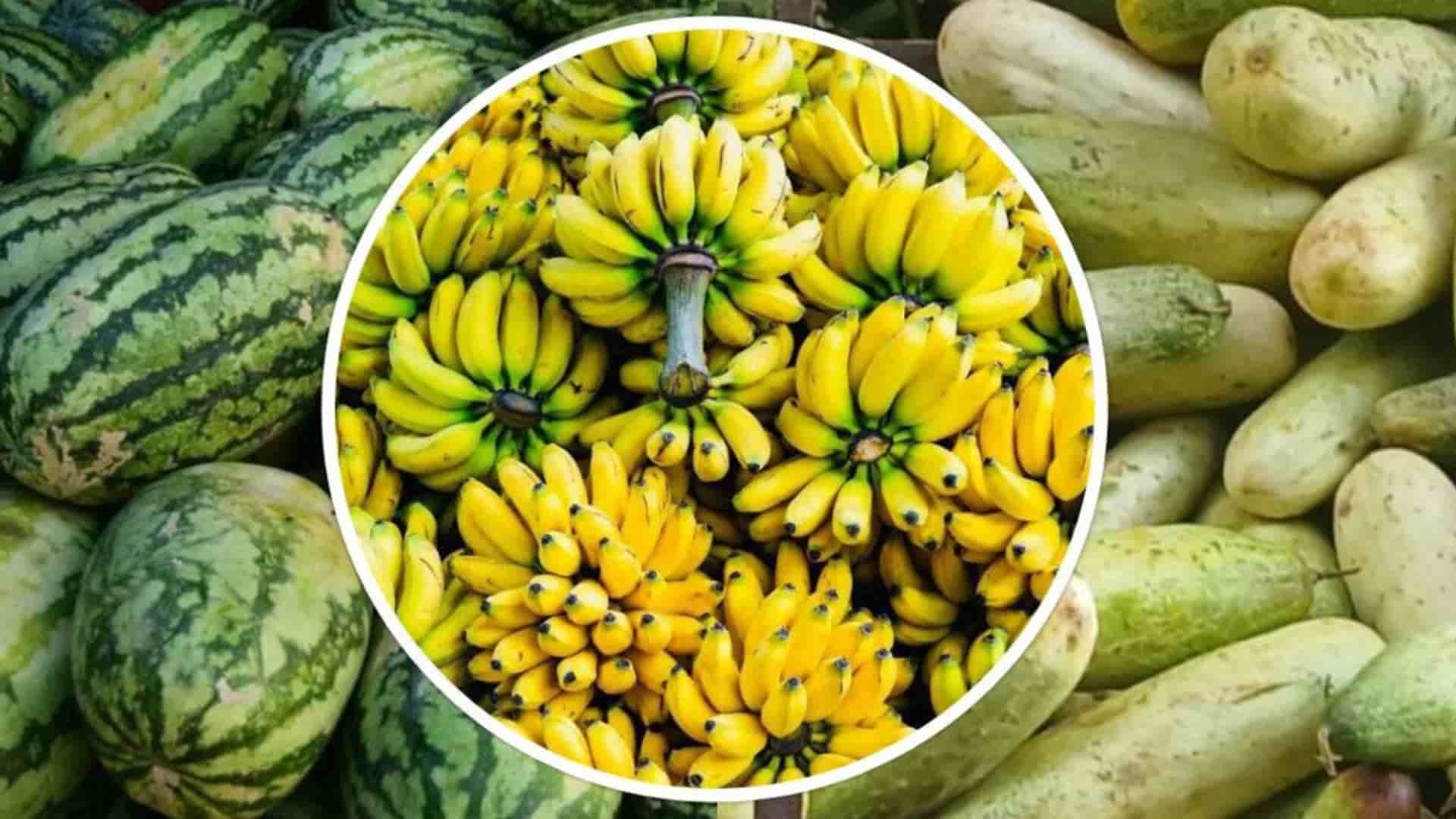
The bananas, tomatoes, coriander, chilies, leafy greens, cucumbers, beans, sponge gourds, pumpkins, and other seasonal and off-season vegetables produced by Sharma are easily sold because the district headquarters, Beni Bazaar, is nearby.
When Sobit was just three years old, his father Bhawadatta died from burns sustained while trying to extinguish a fire at a neighbor’s house. His mother, Seti, raised Sobit along with his two sisters through farming. Due to family hardship, Sobit left for India while studying in grade 10 in search of work.
After spending several years wandering in Delhi without improving his or his family’s economic condition, he returned to the village. Following training from the Dhaulagiri Community Resource Development Center, he began cultivating vegetables instead of paddy and formed a lasting bond with farming.
When the then Horticulture Development Officer of the Agriculture Development Office, Hem Sharma Tiwari, heard that Sobit had stopped planting paddy and started vegetable farming, he visited him personally. His technical advice and support encouraged Sharma greatly.
In 2061 B.S. (2004), Sharma went to Malaysia, leaving the responsibility of his growing vegetable farm to his wife and mother, in order to repay debts incurred during his wife Devi’s illness and due to the worsening conflict in the country. Inspired by the owner of the electronics company where he worked in Malaysia, Sharma returned home after four years and once again devoted himself to vegetable farming.
“The income from Malaysia helped me repay debts and save some money,” Sharma said. “As the peace process began in the country, it became possible to further commercialize the vegetable farming that my mother and wife had continued in my absence.”
Sharma says that the support of his mother, wife, and children has been the backbone of his success. He spends his mornings and evenings working with the soil, and apart from family members, his farm has provided employment to three other people.
“Earlier, it was difficult even to survive. We had to borrow money whenever we needed a few thousand rupees,” said Sobit’s wife Devi. “Vegetable farming is what brought us to where we are today.”
In 2015, Sharma received the Outstanding President Farmer Award from the then Agriculture Development Office for the first time. He has also won numerous awards by participating in agricultural fairs.
He has received training and subsidies from Beni Municipality, the Agriculture Knowledge Center, the Veterinary Hospital, the Prime Minister Agriculture Modernization Project, and various organizations. Alongside his business, Sharma is involved in several farmer-related organizations and groups. He travels across the district facilitating integrated farmer field schools and teaching organic farming techniques to other farmers.
Sharma and Chandra Bahadur Ghimire were among the first to start commercial vegetable farming in Khabara. Inspired by their hard work and success, many farmers in Khabara have now turned toward commercial vegetable and banana farming, according to Yam Bahadur Karki, ward chairperson of Beni Municipality–2.
Out of around 150 households living in Khabara, nearly 25 families are engaged in commercial vegetable farming. Banana farming has become the primary source of income for the entire village. Their vegetables and bananas are sold in Beni Bazaar.
According to Sharma, the major challenges facing commercial agriculture are farmers’ inability to calculate production costs accurately, along with labor shortages and lack of irrigation facilities. Recently, a disease causing banana stems to blacken and leaf tips to turn yellow and dry has emerged as another challenge.
Sharma plans to continue practicing organic vegetable farming and develop his farm into a model agricultural enterprise.