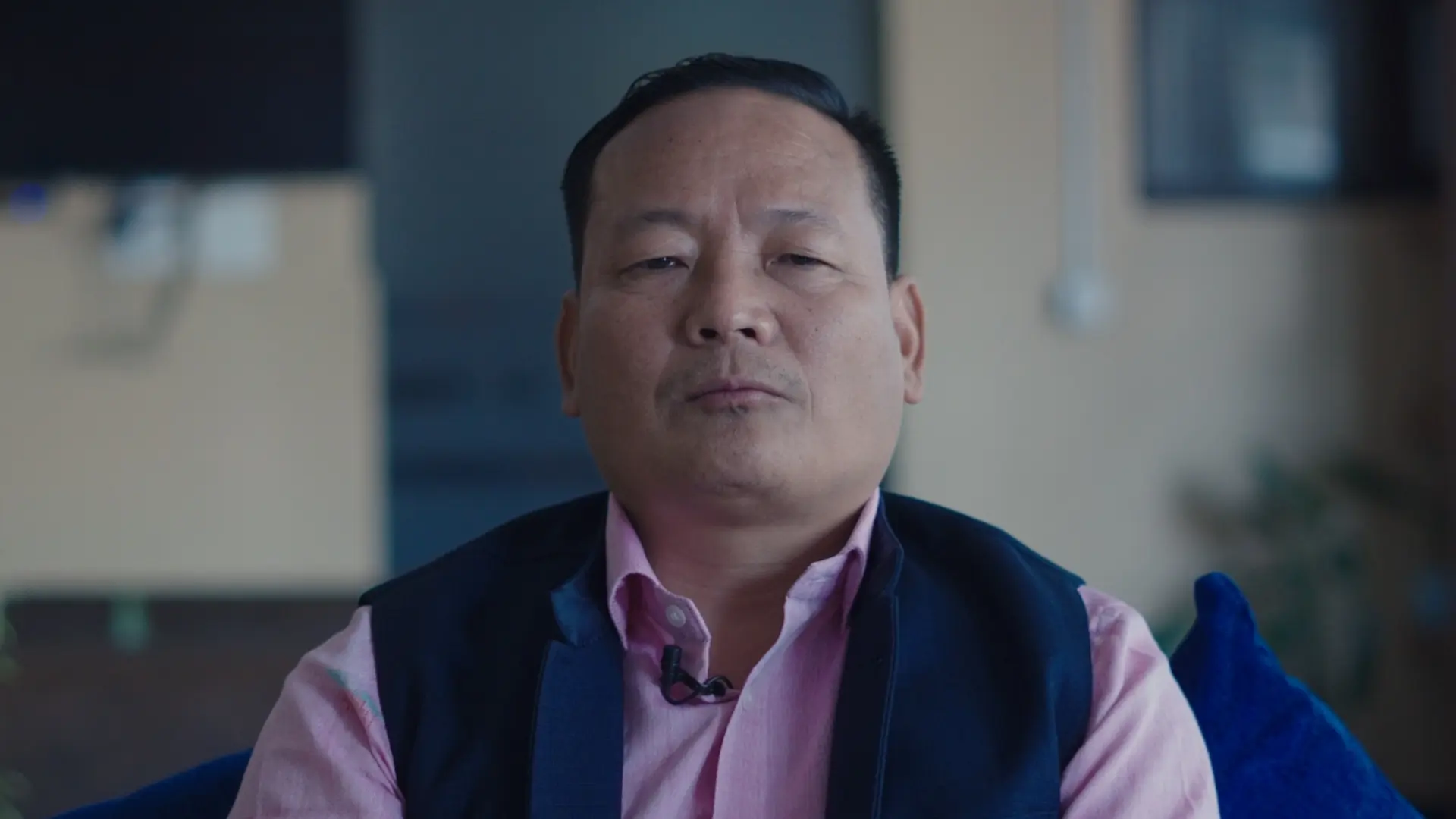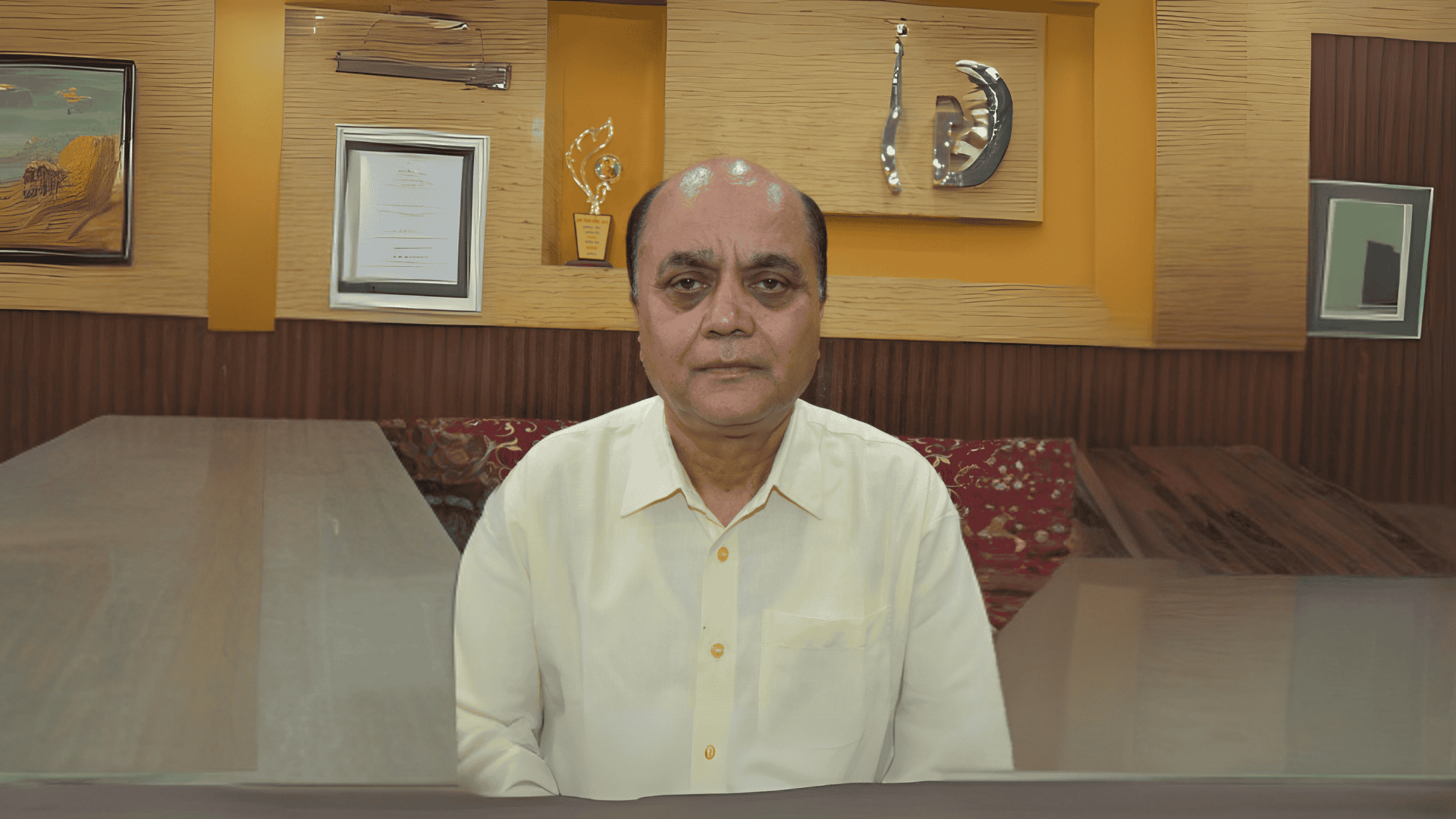

Bharat Malla, a resident of Rahughat in Ward No. 3 of Raghuganga Rural Municipality, has chosen to leave behind the opportunity of permanent residency in Portugal and return to his birthplace to continue goat farming.
The 63-year-old farmer lived in Portugal from 2019 to around 2023 after being invited by his children, who are settled abroad. Although he obtained a permanent residency (PR) card and spent more than a year exploring life in Portugal, Malla said he no longer felt motivated to return after visiting Nepal.
“Before going to Portugal, I had already established a goat and poultry farm in Rahughat,” Malla said. “After staying in Portugal for about 14 to 15 months and obtaining a PR card, I came home for a visit. Once I returned, I realized I wanted to stay here. Goat farming gives me respect and personal satisfaction.”
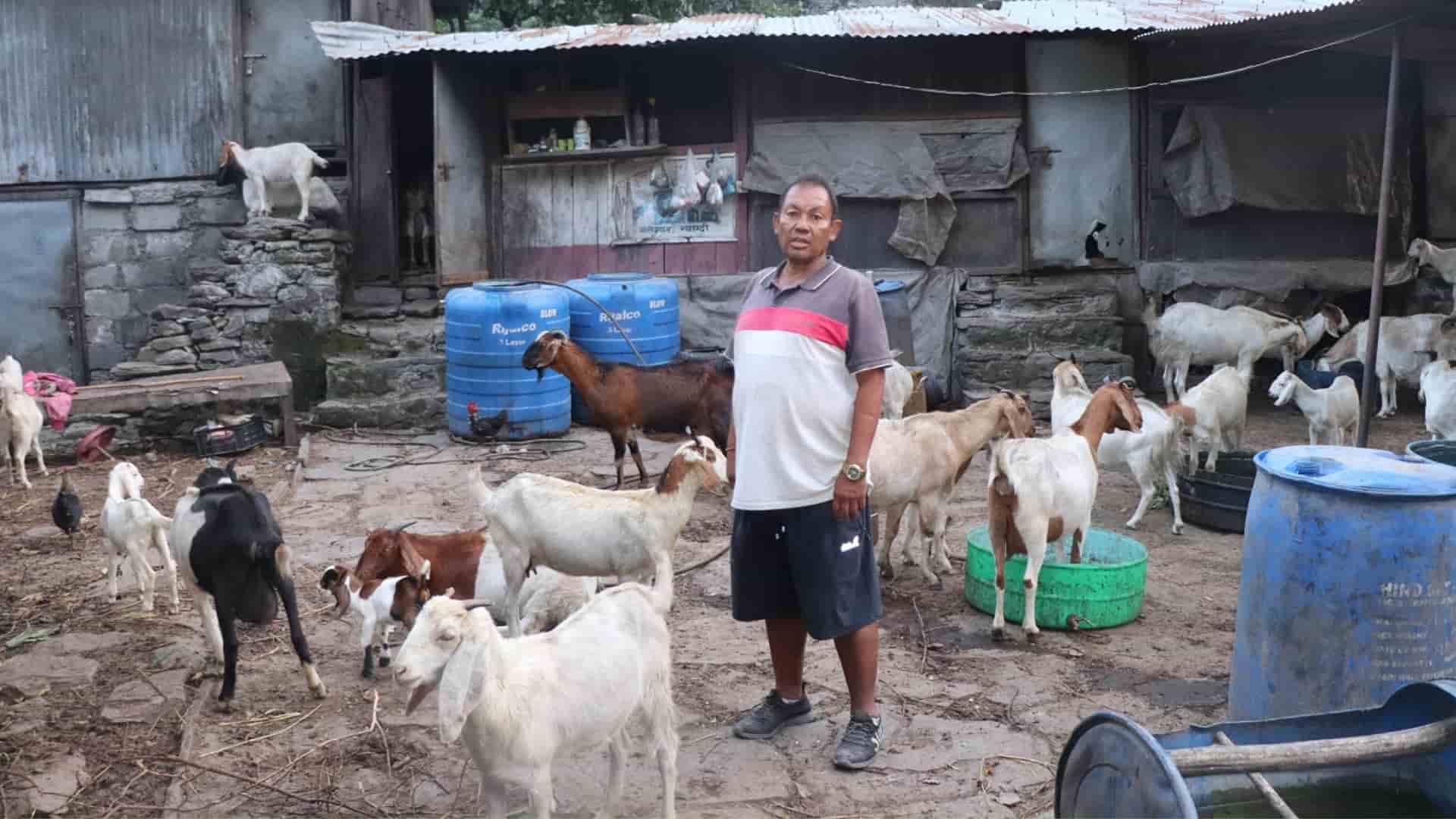
Malla founded the Raghuganga Goat and Agriculture Farm in 2011, where he has been engaged in goat farming, poultry farming, and meat sales. The farm currently houses 91 goats and produces between 25 and 30 goats for sale annually.
In addition to goats raised for meat, local farmers also purchase improved-breed kids from his farm for breeding purposes. The farm raises local breeds along with Jamunapari, Sinhal, and Boer goats.
The enterprise provides employment to two family members and two additional workers. According to Malla, goat meat is sold directly from the farm at NRs 600 per kilogram, while improved-breed kids fetch between NRs 800 and NRs 1,000 per kilogram.
With an investment exceeding NRs 5 million, the farm utilizes nearby hillsides and grazing land for pasture-based goat farming. Separate sheds have been constructed to accommodate kids, breeding females, and male goats according to their age groups.
Malla’s goats are primarily marketed in Beni and Galeshwar, with traders often purchasing livestock directly from the farm.
Despite having the opportunity to settle permanently abroad, Malla’s decision to return home and continue farming has become an inspiring example of how agriculture can provide both economic opportunities and personal fulfillment. By making productive use of local resources, grazing land, and agricultural potential, he believes rural communities can generate employment, income, and entrepreneurship.
“My goal is to inspire Nepalis, especially young people and migrant workers abroad, to return home and invest in productive sectors,” Malla said. “I have realized that the respect, self-satisfaction, and self-reliance gained through agricultural entrepreneurship in one’s own village are far greater than the comforts available abroad.”