

Women in Rum, Ward No. 2 of Malika Rural Municipality, have transformed allo—a wild Himalayan nettle once left unused in forests—into a sustainable source of income. By processing allo fiber and producing various handmade products, local women have become self-employed and economically independent.
According to Manakumari Pun, Chairperson of the Rum Allo Cloth and Dhaka Production Group, 12 women entrepreneurs are currently engaged in weaving allo fabric.
“Each entrepreneur produces between 45 and 150 meters of allo cloth annually,” she said. “The fabric sells at prices ranging from NRs 500 to NRs 750 per meter.”
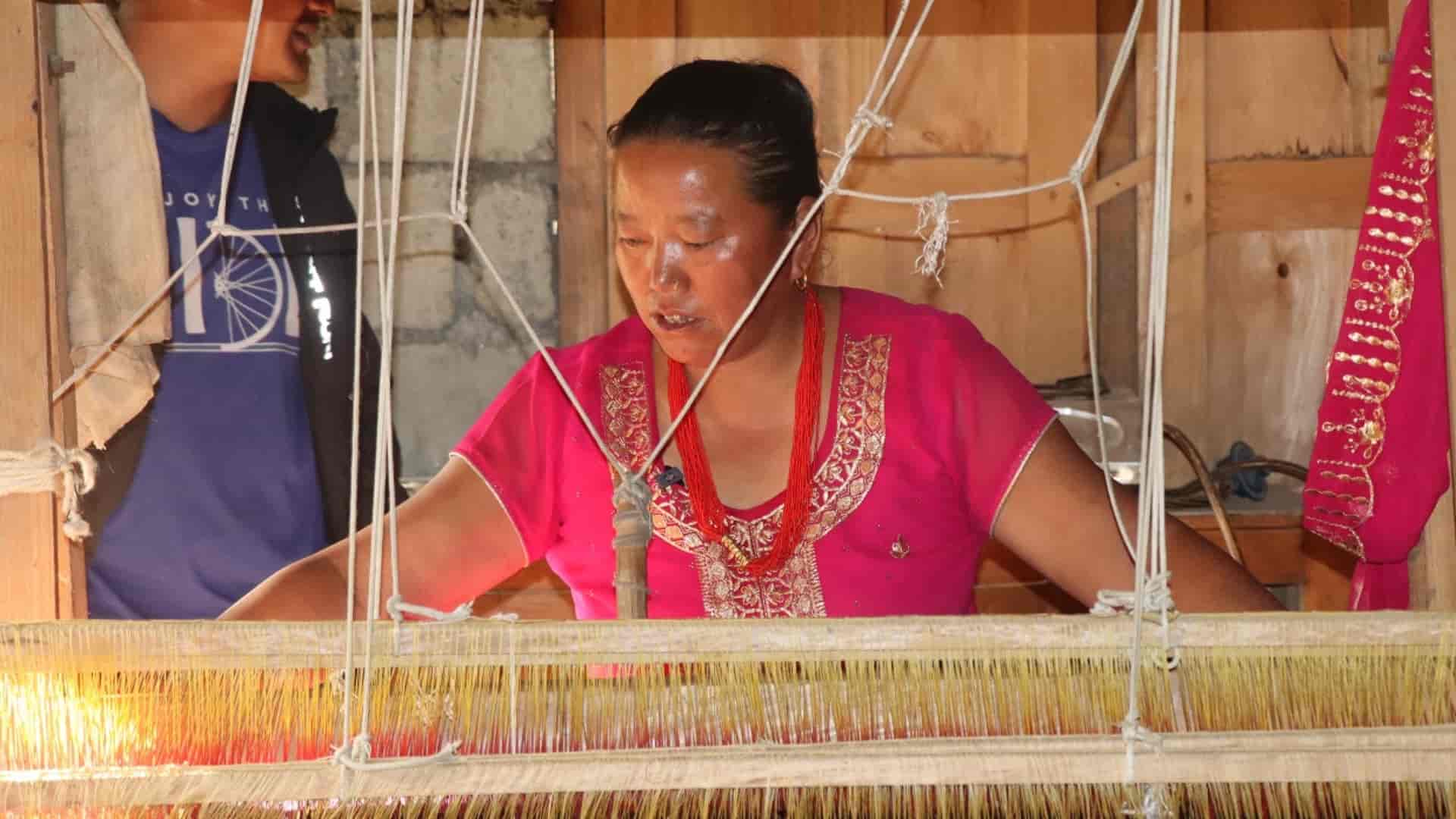
Entrepreneur Himdevi Gharti explained that women collect allo bark from high-altitude forests during the winter season. The fiber is processed and spun into thread, usually during their free time after completing household chores.
According to her, fiber is extracted from the outer layer of the stalk of the Himalayan giant nettle. The fiber is then boiled in hot water and processed into thread, which is woven into cloth using traditional looms.
“Demand for allo yarn and fabric has increased because the products are environmentally friendly, durable, attractive, and based on indigenous skills,” Gharti said. “The additional income helps us manage household expenses and support our children’s education.”
The entrepreneurs have also diversified their products to meet market demand. Besides fabric, they produce coats, bags, shopping bags, shawls, traditional wraps, and purses.
“Earlier, we mainly stitched traditional kurta-suruwal sets,” said entrepreneur Gaumaya Pun. “Now, by introducing new designs based on customer preferences, we have increased our earnings.”
Gaumaya said that an allo coat can sell for as much as NRs 5,000. Tourists and visitors traveling to Rum often purchase allo products as souvenirs. The products have also been promoted through exhibitions and fairs in Beni, Pokhara, Baglung, and Kushma. Nepalis returning to their hometowns during holidays and festivals have also become regular customers.
Homdevi Khatri, Enterprise Development Facilitator at Malika Rural Municipality, said local entrepreneurs have received advanced training and weaving equipment support to improve production and product quality.
She added that organizations including the Poverty Alleviation Fund, the Micro-Enterprise Development Programme for Poverty Alleviation, and other stakeholders have supported the initiative through training, technology transfer, and infrastructure development.
Ward Chairperson Uday Kumar Budhathoki of Malika-2 said a common facility center has also been constructed to support collective weaving activities.
According to him, enterprises based on local resources have played a significant role in women’s economic empowerment while creating employment opportunities within the community.
Once discarded in forests, allo has now become a catalyst for change in the lives of Rum’s women. Through hard work, traditional skills, and collective effort, they have built a sustainable source of income within their village. With continued promotion and expanded market access, the allo industry is expected to become an important pillar of the rural economy.