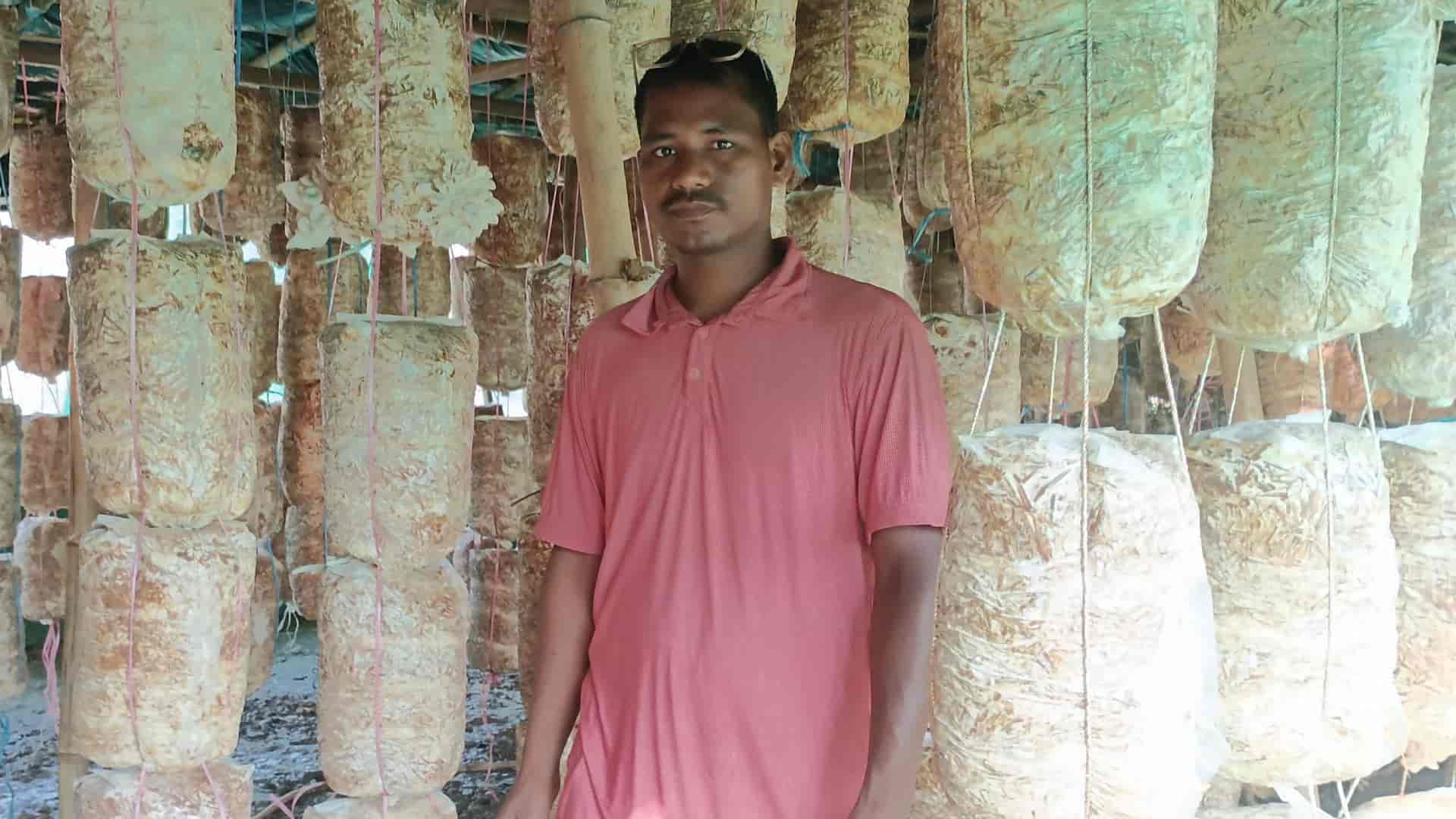

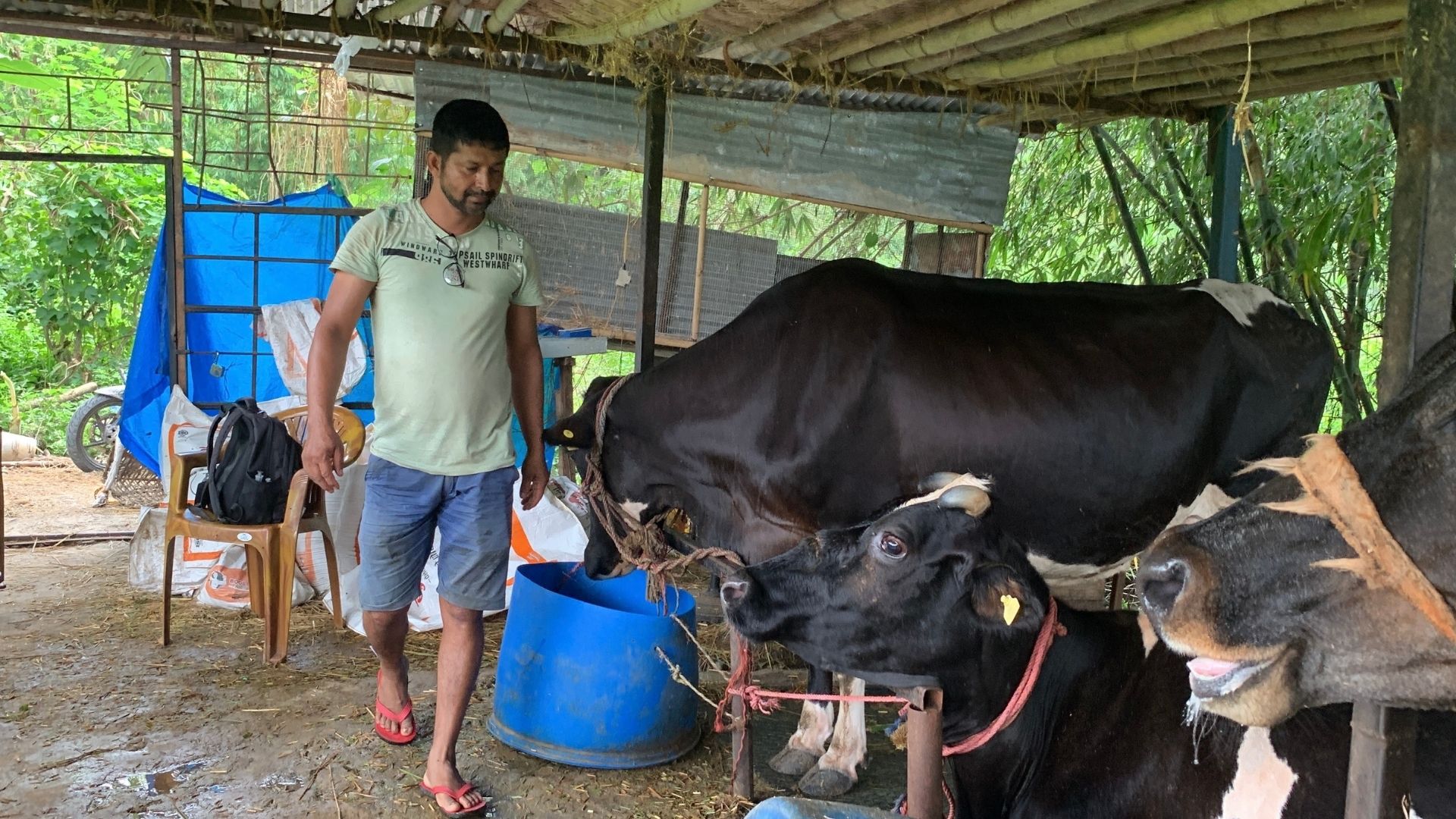

Bhushika-based Yuvraj Tiwari of Urlabari–2 started his agricultural farm with just NRs 300,000, and today, his investment has grown to around NRs 10 million. With a strong desire to contribute to Nepal, Tiwari began a small poultry farm eight years ago. Initially starting with 150 chickens, his farm now houses 15 Holstein cows and over 1,500 broiler chickens.
Choosing to work in Nepal instead of going abroad, Tiwari has exchanged many personal dreams for hard work to reach this level of success. In the beginning, he faced numerous challenges, but today, after dedicating himself fully, he earns around NRs 40,000–50,000 per month while living happily with his family in the village.
Alongside poultry farming, Tiwari has ventured into dairy farming and achieved remarkable success locally. His daily routine has completely changed, with mornings and evenings fully dedicated to livestock care. Every morning, he reaches the Pathari market, five kilometers away, shortly after dawn. Tiwari wakes up at 3:00 a.m. to tend his cows, ensuring he is at the market by 5:00 a.m. with fresh milk.
His farm includes nine milking cows, two heifers, and 15 cows in total, while the nearby poultry farm houses over 1,500 broilers. His cows produce more than 70 liters of milk daily, which he sells in the morning at 5:00 a.m. and again in the evening at 4:00 p.m. Realizing that broilers alone were not enough for stable income, Tiwari invested NRs 300,000 three years ago to build a cow shed, gradually turning his dream into reality.
In the early days, he had neither significant capital nor experience but carried a strong determination to “make it happen.” Supported by his wife and two daughters, Tiwari has steadily achieved success in his village. His wife, Chandrakala, helps with milking, feeding, and managing the shed, while their two daughters, who are studying for a BBS degree, assist with chicken care and feeding. They express pride in their parents’ modern approach to livestock farming, saying that their hard work has allowed them to pursue higher education.
While the village sleeps, Tiwari starts his day in the shed with a flashlight and a bucket, finding new energy in the milk he collects. “When selling milk, there’s no time to sleep. We have to reach the market in the evening as well. But the feedback from customers gives us energy to keep going,” he says.
What started as a modest venture of 200–300 chickens has now expanded into a thriving farm with over 1,500 broilers. Villagers who once doubted his efforts now praise his progress and even seek advice to learn from his experience.
Currently, Tiwari faces new challenges. Although a milking machine could save time and reduce workload, he has not yet received government support. He hopes that municipal or ward-level assistance could ease some of the burden. He also highlights the need for equipment like bedding mats, feed-cutting machines, proper knowledge on feeding, modern shed construction, hygiene practices, and basic animal healthcare training to make his work more efficient.
Yuvraj Tiwari’s journey reflects determination, innovation, and the rewards of investing hard work into Nepal’s agricultural sector.