
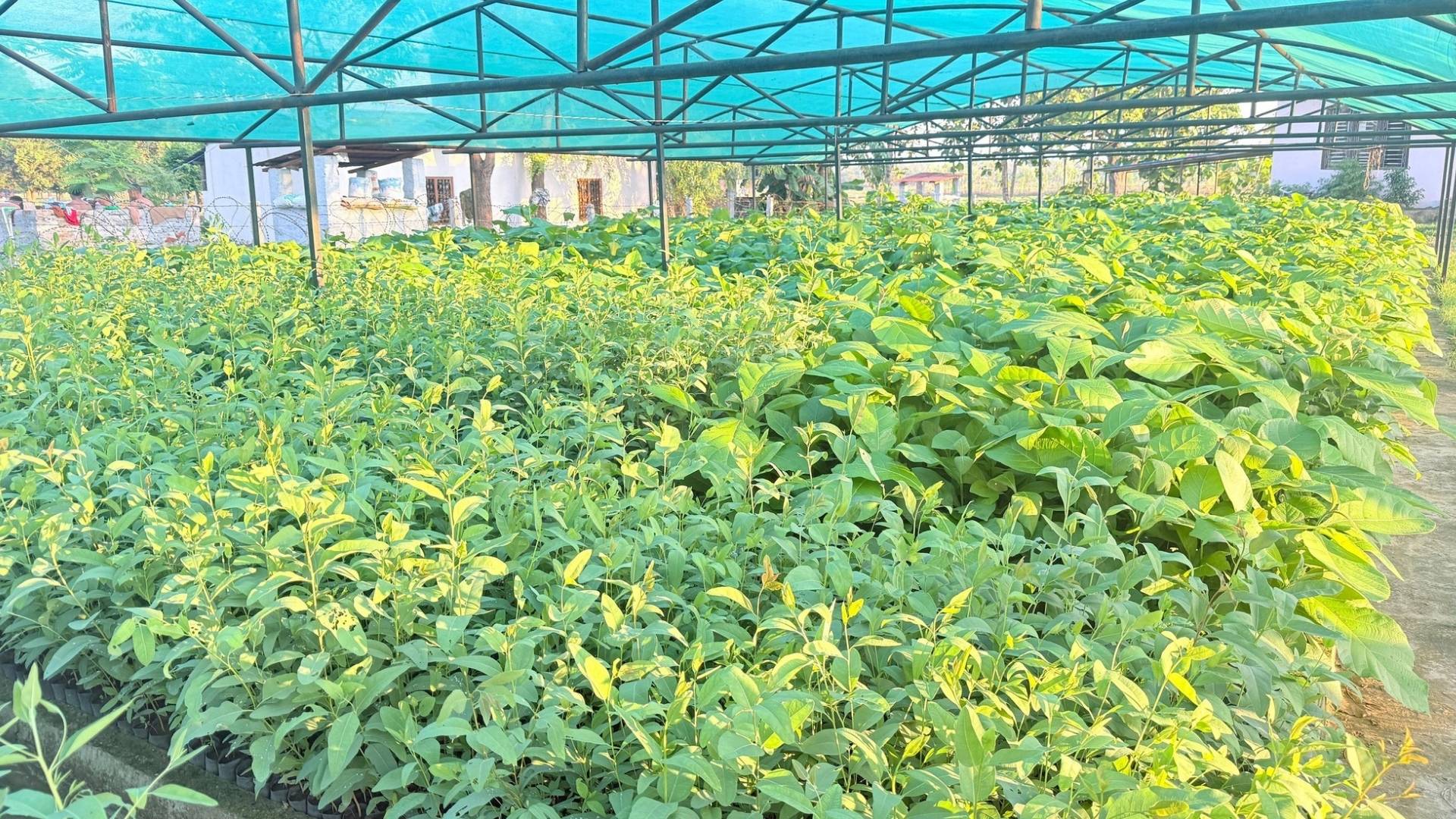

In Banke, efforts are underway to expand greenery, maintain environmental balance, and boost farmers’ income through large-scale sapling production and distribution. Previously dependent on natural forests for timber and firewood, the district is now gradually focusing on planting trees in private farms and public spaces.
According to Senior Forest Officer Sushil Subedi of the Division Forest Office, thousands of saplings have been produced and distributed across the district, contributing significantly to local greenery. In the fiscal year 2081/82, the office produced 561,000 saplings and distributed 513,000 across private lands, community forests, roadways, religious sites, and public spaces.
“The goal of distributing saplings is not only to increase greenery but also to meet local timber and firewood needs while enhancing farmers’ income,” Subedi explained. In areas with limited forest cover, farmers have increasingly been motivated to plant trees on their own lands, including unused farmland and home gardens.
Fast-growing, high-demand species such as teak, eucalyptus, and khair are particularly popular for their quick returns, while multi-year species like Shrikhand, Kalkifol, Jacaranda, Gulmohar, Dhupi, and Jamun are gaining attention for long-term benefits. Proximity to veneer, plywood, brick, and herbal processing industries ensures a market for timber grown on private lands, increasing farmers’ income while reducing pressure on natural forests.
The Division Forest Office also emphasizes environmental balance and biodiversity conservation, promoting local species like Sal, Mahuwa, Khair, and Sisso for reforestation and ecosystem restoration. With over six lakh saplings targeted for production this fiscal year, nursery management involves women’s active participation, creating employment, developing skills, and promoting self-reliance. Banke is successfully linking forest conservation, farmer livelihoods, and environmental responsibility, fostering a greener and more sustainable future.