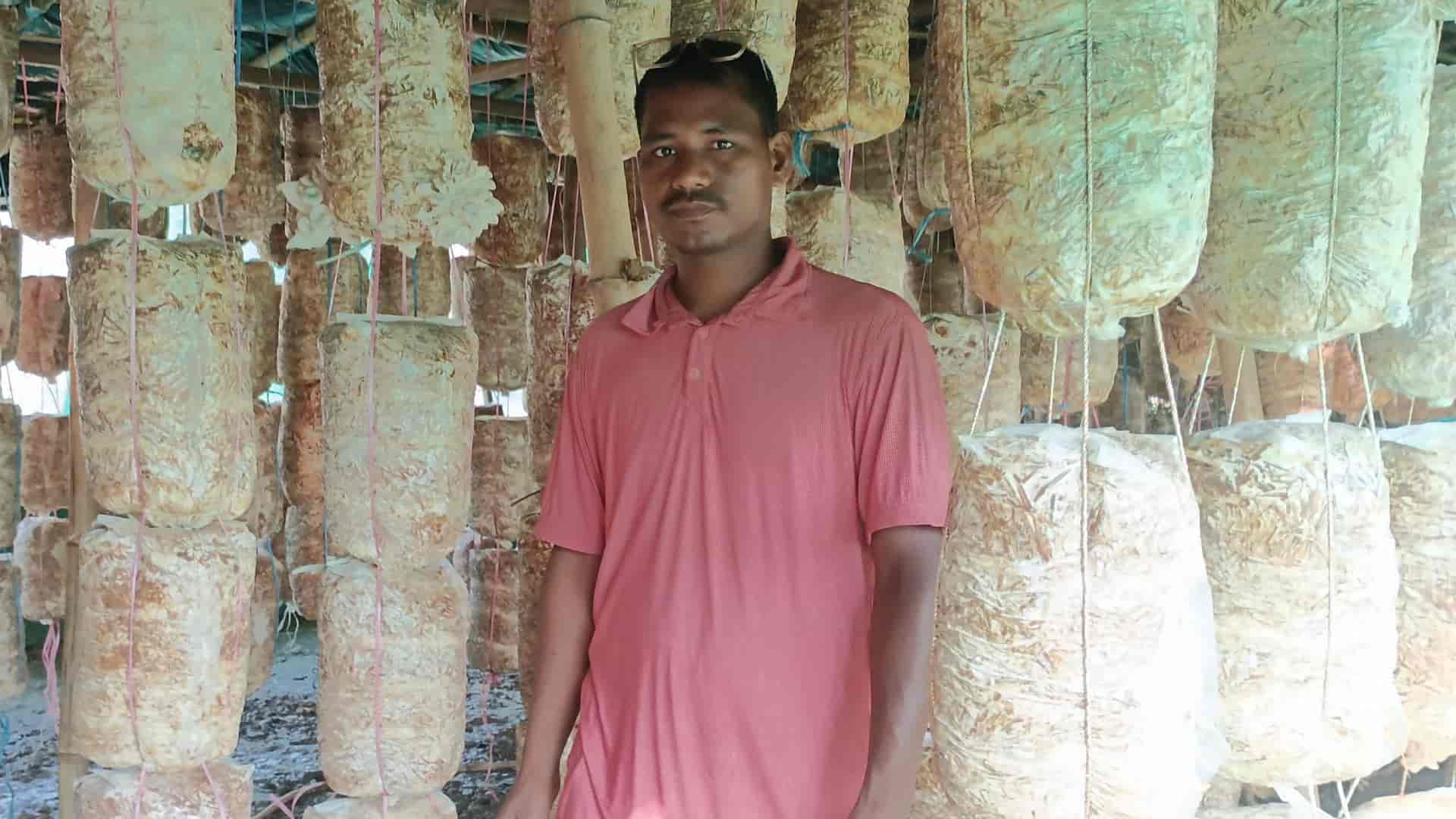

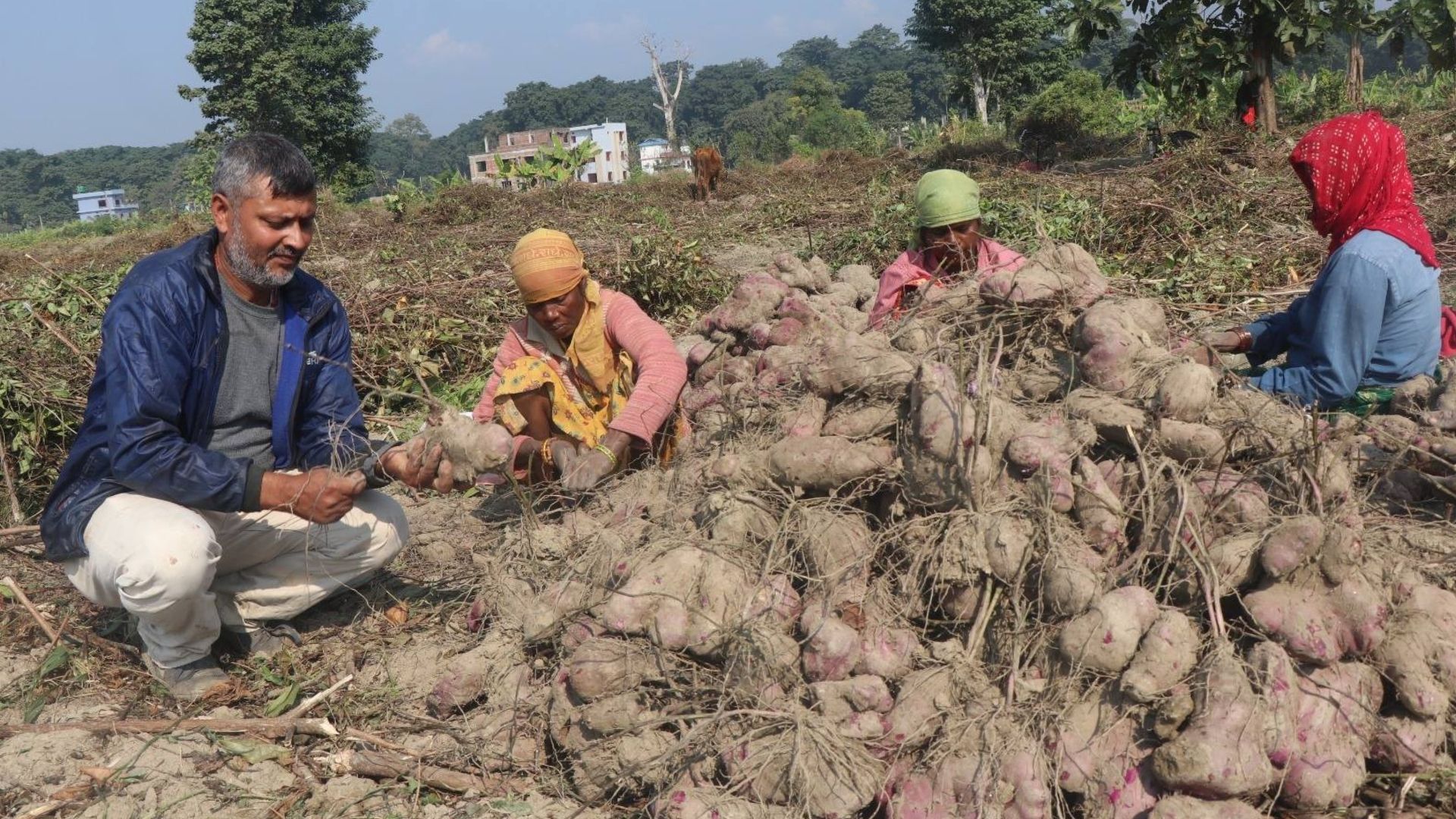

Khemraj Katel, who moved from Sankhuwasabha to Sundarharaicha Municipality in Morang seven years ago, is now recognized as a successful farmer. Despite having no prior experience in commercial farming, the sweet potato cultivation he started three years ago has now secured livelihoods for 22 people.
Katel began sweet potato farming by leasing three bighas of land in Sundarharaicha–7, an area locally known as “75 Bigha.” “I had no knowledge of farming at all, but after three years of effort, sweet potato farming has enabled me not only to become self-reliant but also to provide employment to 22 people,” he said.
New Hope on Dry Land
The “75 Bigha” area of Sundarharaicha–7 had long suffered from water scarcity and frequent threats from wild animals. Paddy and maize crops would dry up, and even borewell irrigation was insufficient. “Banana farming was also practiced earlier, but elephant attacks caused repeated damage,” Katel explained. Under such circumstances, he chose sweet potato as an alternative crop.
Inspired by friends who had started sweet potato cultivation, Katel leased three bighas of land initially and has now expanded farming to seven bighas. Landowner Prakash Upreti shared that due to the lack of water, farming had nearly stopped in the area. “After the establishment of Purvanchal University, water access became even more limited. However, sweet potato grows well even on dry land,” he said. Seeing the income potential of sweet potato, farmers in the area have regained hope.
According to Upreti, a single sweet potato plant can produce three to five kilograms, and demand increases until Maghe Sankranti, boosting farmers’ enthusiasm. However, wild animals remain a persistent challenge. “Sometimes wild boars, sometimes deer, and occasionally elephants enter the fields,” Katel said. “Wild boars uproot and eat the plants. If the sweet potato is protected, it yields like gold, but protecting it is difficult.”
Katel pays NRs 60,000 per bigha annually in land rent for seven bighas. After covering all expenses, he manages to save around NRs 700,000 per year while providing employment to 22 people. He added that increasing disease problems in banana crops also pushed him toward sweet potato farming as an alternative.
Once grown only for household consumption, sweet potato has now expanded into a commercial crop. According to Katel, the local loamy soil, dry terrain, and favorable climate make the area suitable for sweet potato farming. Due to increasing elephant disturbances in paddy, maize, and banana crops, farmers are being drawn toward alternative cash crops.
“Sweet potato farming is safer because elephants cannot enter the dense bushes,” Katel said, though wild boars still cause some damage. sweet potato is sold directly from the field at NRs 45 per kilogram. Traders visit villages daily carrying jute sacks, so farmers only need to harvest and fill the sacks. “There is no worry about sales,” he added.
Sweet potatoes can be harvested from mid-November to late December, with peak demand during Maghe Sankranti. A single plant can yield up to 10 kilograms, Katel said.
Future Prospects
Katel believes that with support from local governments in irrigation, market management, and wildlife control, Sundarharaicha Municipality could become a national model for sweet potato farming. He emphasized that sweet potato is not just a cash crop but a symbol of struggle, cooperation, and opportunity.
The hard work of local farmers is turning barren land productive again. Their journey reflects how collaboration, self-reliance, and employment generation can emerge from agricultural innovation.