
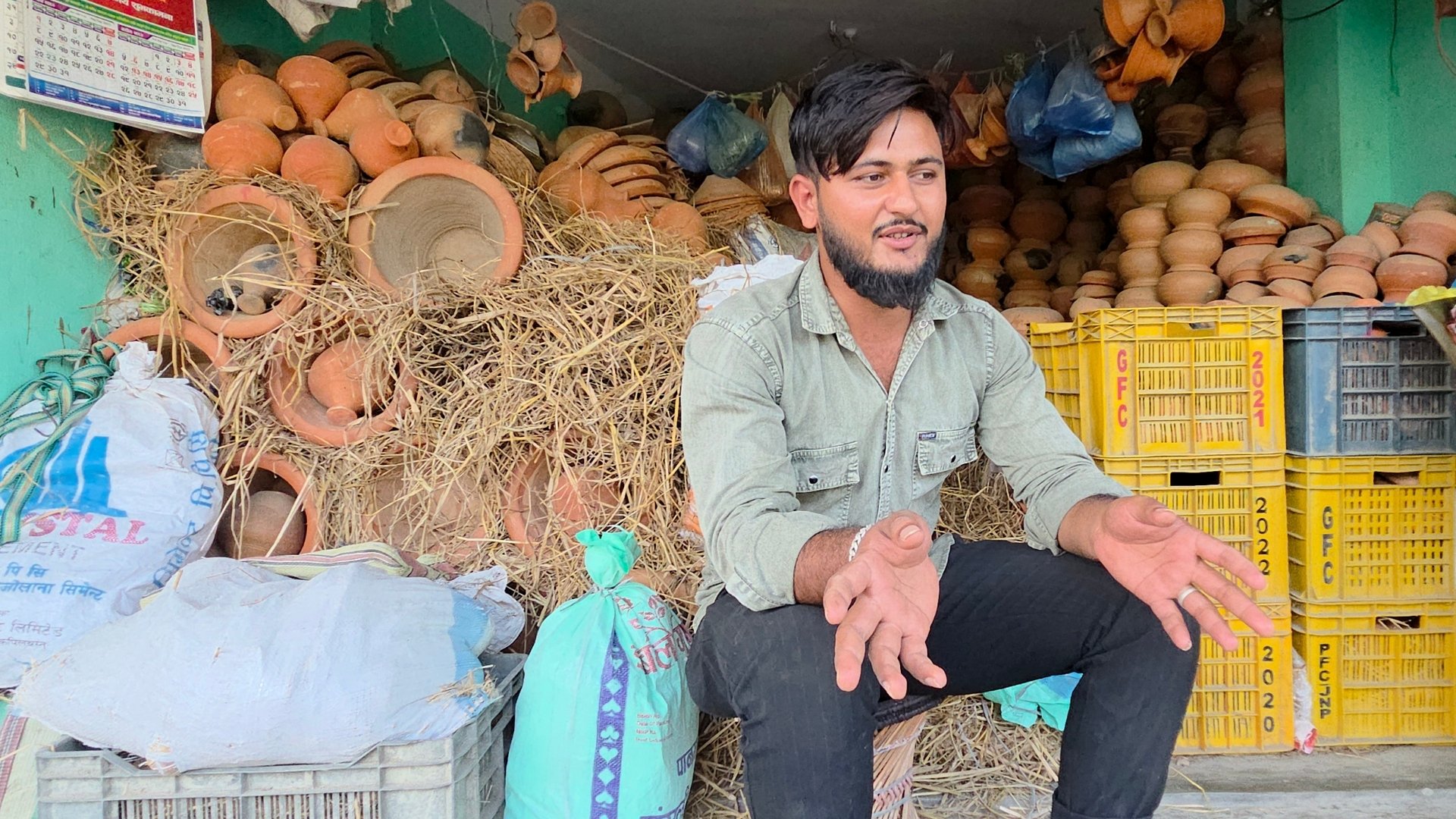

Suraj Pandit of Itahari-6 has become self-reliant by making and selling clay pots. He has been earning a good income solely through this traditional craft.
Although the use of clay pots has declined in both rural and urban areas in recent years, Pandit has continued this ancestral occupation as his main source of income. “Our entire family makes clay pots. Our forefathers were also engaged in this work, and we have continued their legacy. This is the main source of income for our family, and we have been running our household through it,” Pandit shared.
Pandit operates a clay pottery workshop in Inaruwa. The pots made there are transported to Itahari for sale. Some traders even visit his workshop directly to purchase the products. According to Pandit, not all types of soil are suitable for pottery, and it has become increasingly difficult to find good-quality clay nearby. Previously, they used to bring clay from Biratnagar and Barjutal areas, but now they source it from different parts of Sunsari and Morang districts.
A tractor-load of clay costs between NRs 12,000 and NRs 18,000. From one tractor of clay, pots worth around NRs 150,000 can be produced. Even after deducting all expenses, Pandit earns over NRs 100,000 per month. Despite the growing use of plastic goods in the market, the demand for clay pottery remains strong. Traders visit his workshop to buy products in bulk, and retail sales through shops also remain steady. Customers from Jhapa, Morang, Panchthar, Ilam, Khandbari, Phidim, Dhankuta, and Bhojpur regularly place orders, Pandit said.
At present, Pandit makes over 100 varieties of clay items, including paini (used for brewing alcohol), flower pots, water jars, pitchers, ritual pots (kalash), oil lamps (diyo), vases, yogurt bowls, water filters, piggy banks, and clay glasses. “There is no worry about unsold stock. Even if daily sales are slow, demand rises sharply during festive seasons. In the past, we had to carry our products from village to village to sell them, but that’s no longer the case,” he added.
According to him, the prices of his products range from NRs 2,000 to NRs 8,000 per piece. Clay ovens used for baking tandoori roti sell for NRs 5,000–8,000, paini for brewing alcohol cost NRs 600–2,000, flower pots are priced between NRs 30–800, oil lamps between NRs 2–30, and smaller items are sold by the dozen.
Pandit further said, “Sales increase significantly during Chhath festival. Normally, I earn over NRs 100,000 a month, but during festive seasons, my income rises to around NRs 170,000–180,000.”
Nawaraj Shah, a trader from Ramdhuni Municipality-1, Jhumka, said that the tradition of making clay pots is gradually declining and needs preservation and promotion. “Clay pots are essential from birth to death. I have been in this business for four years now. With the Chhath festival approaching, the demand for diyo and kalash is extremely high. By sourcing products from Inaruwa, Biratnagar, and even India, I earn around NRs 40,000–50,000 a month,” he shared.
Today, artisans like Pandit and Shah are preserving their ancestral craft while adapting it to modern markets—ensuring both sustainable income and continuity of their traditional heritage.