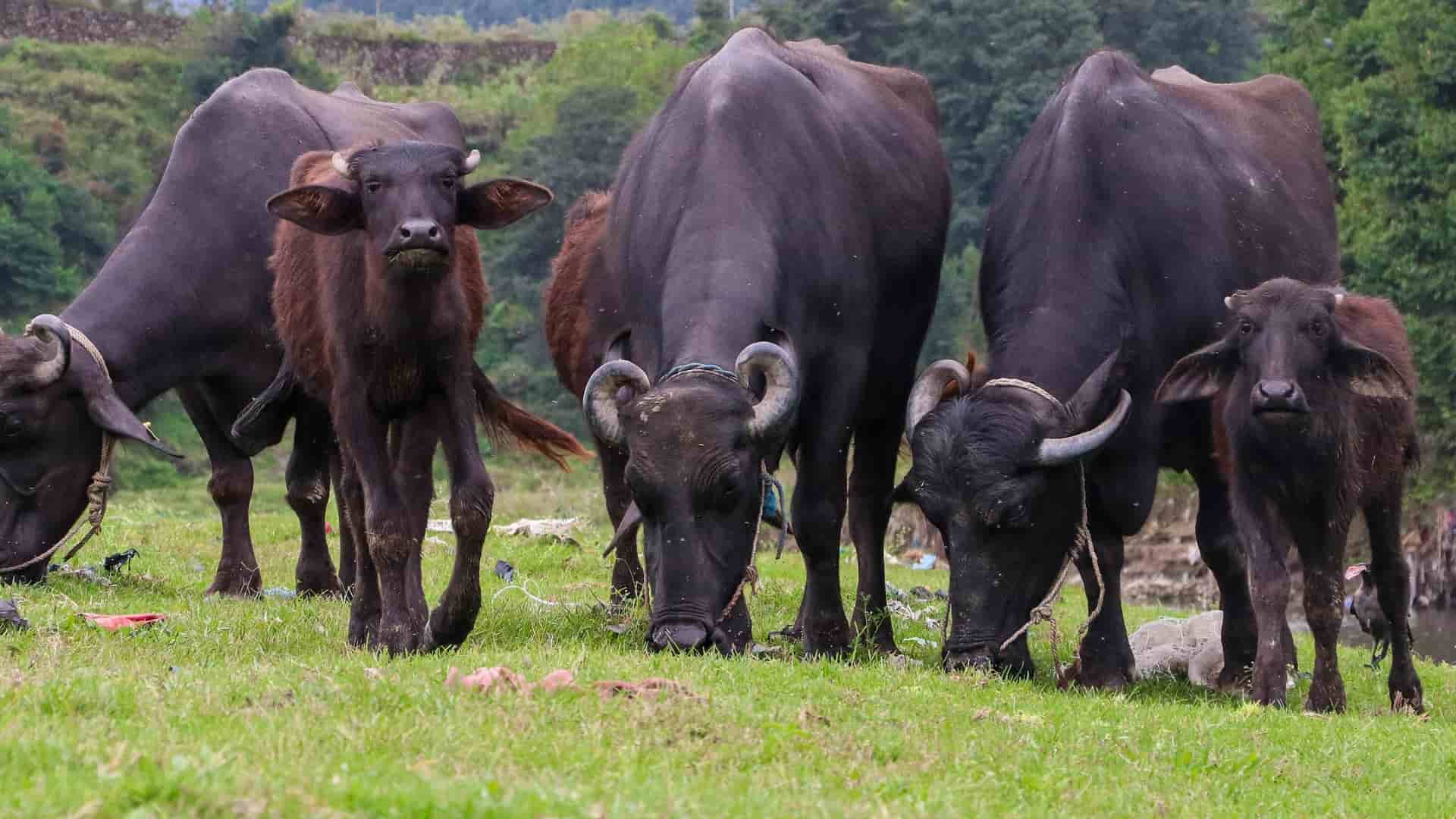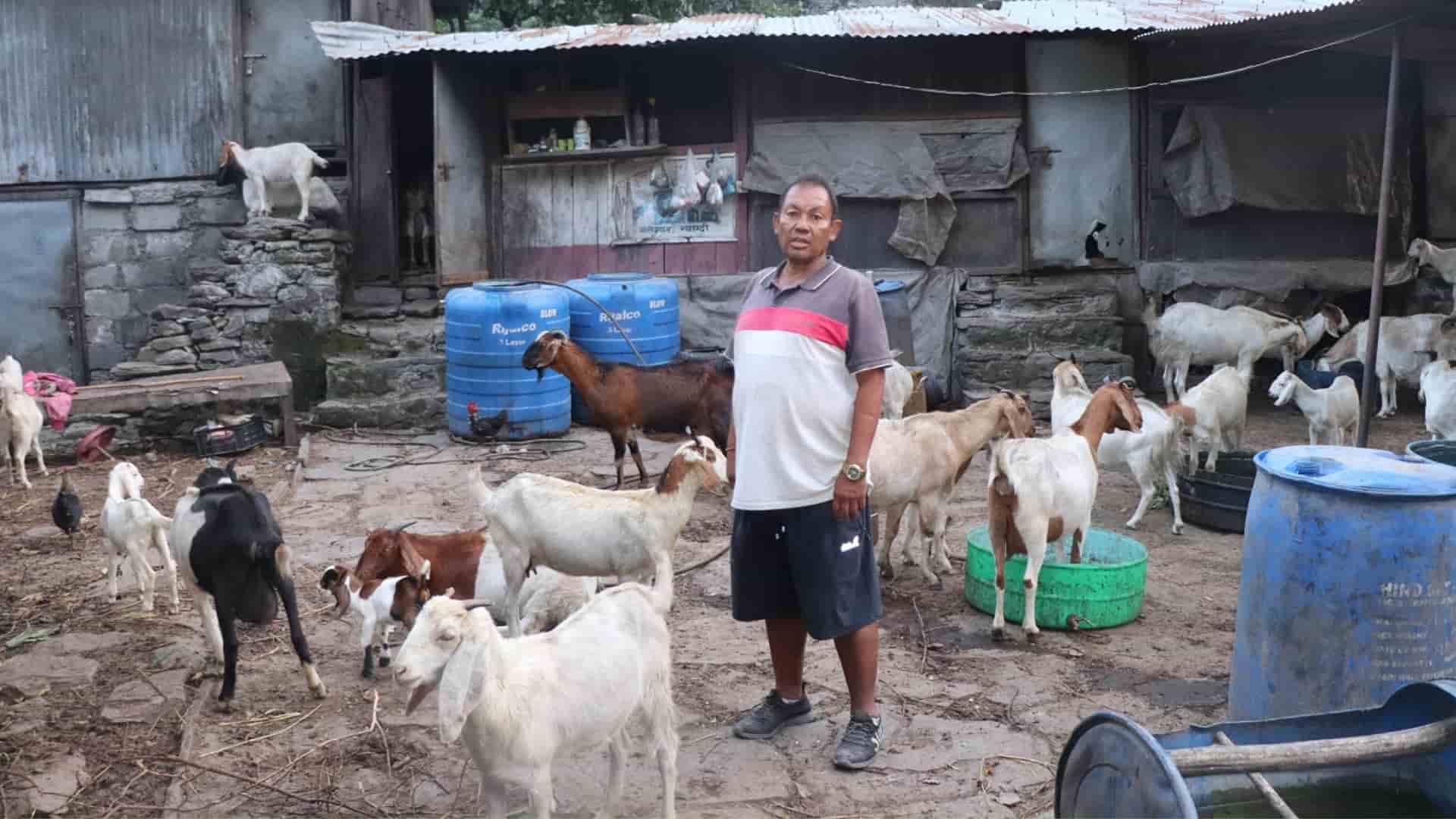

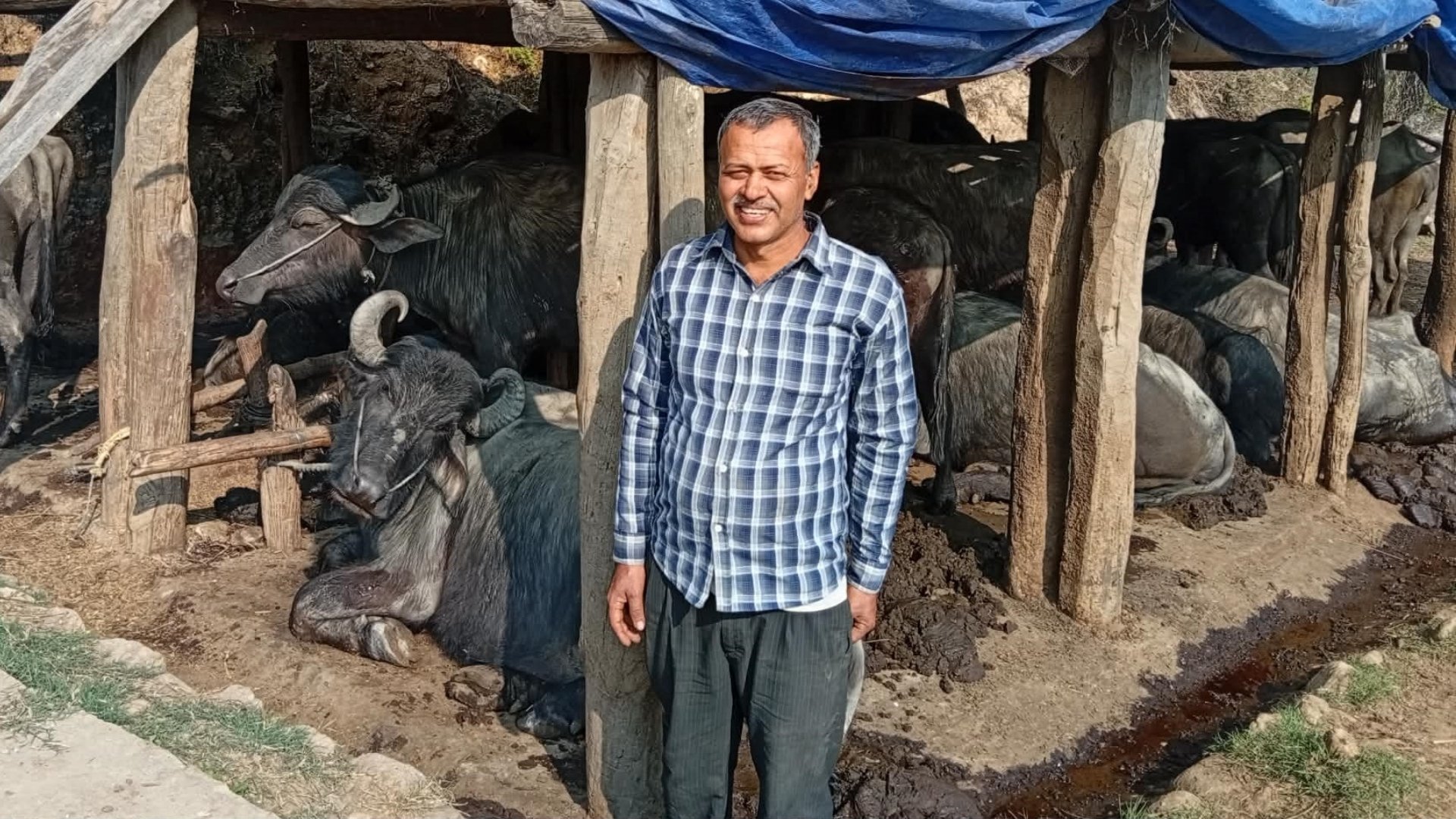

Seven years ago, Ramesh Acharya of Pokhara Metropolitan City–33, Bharatpokhari, started raising buffaloes with just two calves. Today, his small effort has grown into a fully commercial enterprise. At a time when negative perceptions toward agriculture were widespread in society, Acharya, who had completed postgraduate-level studies, began buffalo farming at Tikhedhunga in Suraudi, Bharatpokhari.
In the early days, even his neighbors, relatives, and friends mocked him, questioning his decision and speaking ill of his work. Times have changed. Those who once belittled and ridiculed him are now impressed by his flourishing buffalo farming and commercial agricultural ventures. As his buffalo rearing has grown into a business, Acharya now takes pride in his profession. Recalling the early days, he said there was nothing but bushland at Tikhedhunga, which he cleared and set up temporary sheds to begin farming.
“I started this business by putting up a simple shelter amid the forest,” Acharya said. “Later, I built proper cowsheds and feed storage and gradually organized the farm. Now, there are 30 buffaloes in the shed.”
In recent years, Acharya has been selling lactating buffaloes every year. Last year alone, he sold 18 lactating buffaloes. He says there is no difficulty in finding buyers, as a single lactating buffalo generally sells for up to NRs 100,000. Despite holding a bachelor’s degree and having experience of ten years in teaching, three years in foreign employment, and work as an electrical technician, Acharya has now fully committed himself to commercial agriculture.
In 2021, he registered Tikhedhunga Baghmara Livestock and Agriculture Farm and formally entered commercial farming. Along with buffalo rearing, he has expanded into commercial watermelon farming, vegetables, fruits, and other agricultural products. At present, he cultivates maize, watermelon, cucumber, garlic, onion, and other crops on his farm. Acharya shared that he began commercial farming in 2019 by taking a loan of NRs 300,000 from small farmers. After registering the farm, he later took additional loans from the Agricultural Development Bank to expand his operations.
An advocate of experimenting with new approaches in commercial farming, Acharya initially planted 15–20 watermelon plants as a trial. The following year, he expanded cultivation to two ropanis of land. After achieving good yields, he jointly cultivated watermelon on around 35 ropanis last year. With the support of his wife Dhanalakshmi and his children, who are studying at the bachelor’s level, Acharya remains highly motivated in his agricultural work. He said that annual flooding of the Suraudi River causes erosion every year, and that flood control measures, along with the proper use of river water for irrigation, are urgently needed.
Acharya also complained that due to the lack of a concrete bridge and properly managed roads, it has been difficult to transport milk to the market. The monkey problem in Suraudi is also severe. Most of the agricultural produce from the farm is currently consumed within Bharatpokhari itself, he said. He added that if the road to Suraudi were improved and a bridge were constructed over the Tuni Khola, it would be much easier to transport farm produce to Pokhara and Dulegauda in Tanahun.
Although the Suraudi River area has ample water sources, the lack of proper management has caused irrigation difficulties, Acharya said. He emphasized that if properly managed, the available water resources could be effectively linked to agricultural production. He further noted that due to the failure to control erosion along the Suraudi River, fertile land is being turned into riverbeds every year, creating serious problems for residents in the watershed area.